
How Can I Appear More Frequently in AI Queries?
By Franixo · · 14 minutes read
The question "How can I appear more frequently in AI queries?" has become one of the most important digital visibility questions that brands and website owners need to address alongside traditional SEO efforts.
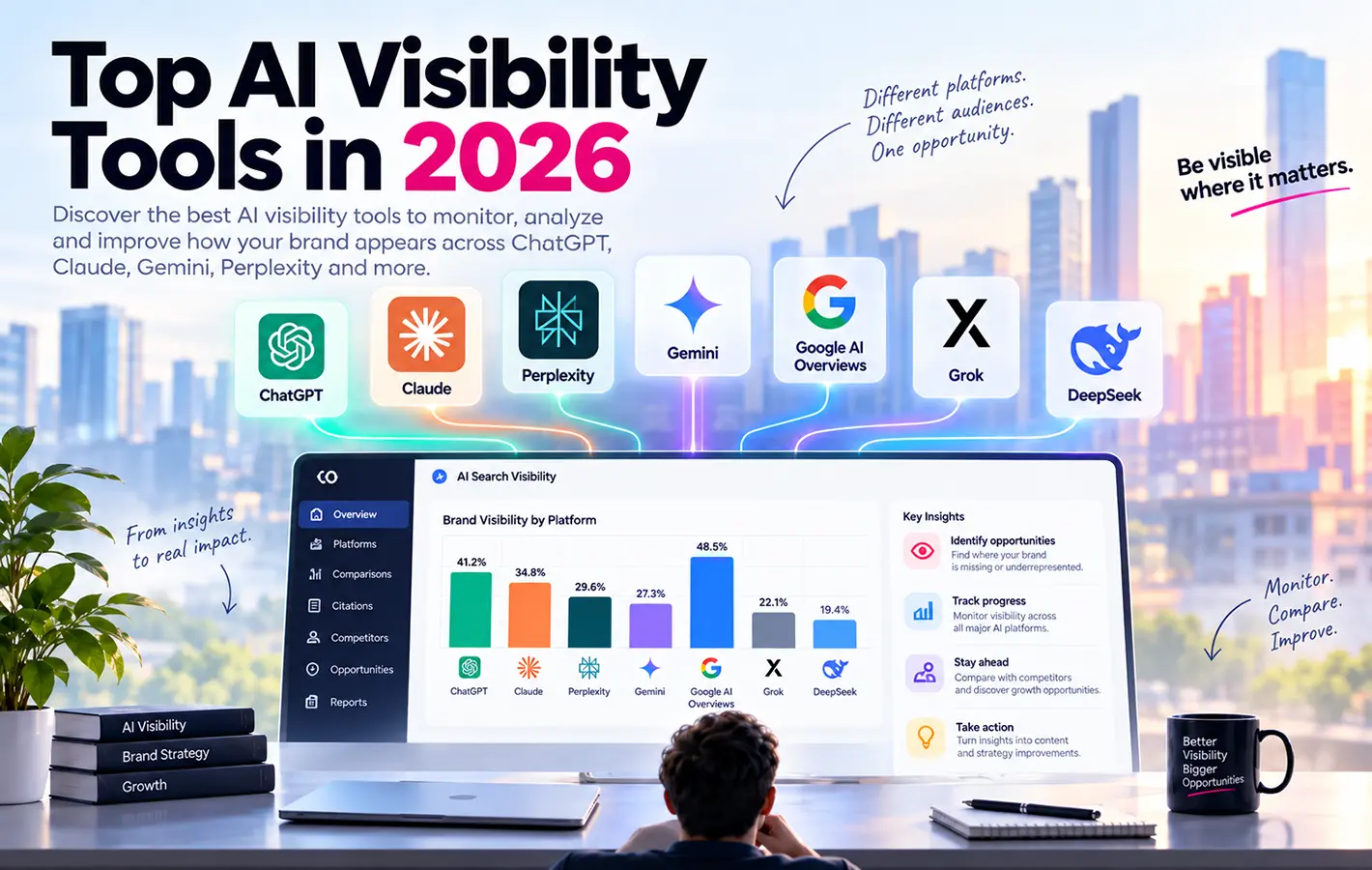
AI-powered platforms such as ChatGPT, Gemini, Perplexity, Claude, and Google AI results are changing the way users access information. Instead of entering only a few keywords into Google, users now ask detailed questions directly, such as "What are the best alternatives?", "Which product should I choose?", or "How can I solve this problem?"
Therefore, being visible in AI searches is no longer just about ranking for specific keywords. It also means ensuring that your brand is perceived by AI systems as a trustworthy, understandable, and citable source.
To gain more visibility in AI queries, several factors should be considered together, including content quality, brand authority, technical SEO, structured data, topical coverage, and information about your brand across different web sources.
Traditional SEO is still important, but it may no longer be sufficient on its own. Content should directly answer user questions, provide clear information, be supported by trustworthy sources, and be structured in a way that AI systems can easily understand.
It is also important to measure on which AI platforms and queries your brand appears and which competitors appear alongside you. After all, you cannot improve AI visibility that you do not measure.
How Do AI Search Engines Select Content?
AI search systems do not operate completely independently from traditional search engines.
Information from search indexes, web pages, trusted publications, brand websites, third-party sources, and various other data sources can be combined to generate direct answers for users.
For this reason, appearing more frequently in AI queries requires a broader strategy than simply trying to rank a single web page at the top of Google.
First, your content must be technically accessible. Then, it should be clear which question the content answers, the topic should be covered comprehensively, and the page should provide trustworthy information.
For example, OpenAI states that publicly accessible websites may appear in ChatGPT Search results and that OAI-SearchBot should not be blocked if you want your content to be discoverable.
From an AI visibility perspective, the following areas should be prioritized:
- Ensure that your website is accessible to AI and search engine crawlers.
- Create content that directly answers user questions.
- Cover topics comprehensively rather than superficially.
- Keep brand, product, and service information consistent.
- Build brand mentions on trustworthy third-party sources.
- Update content regularly.
- Use clear heading and content hierarchies.
- Strengthen signals of expertise and experience.
In short, adding a few AI-specific keywords is not enough. Your brand's overall digital presence across the web should be considered.
How Do AI Models Such as ChatGPT, Gemini, and Perplexity Select Sources?
AI models do not select sources randomly. Through Retrieval-Augmented Generation (RAG) architectures, they may filter and prioritize content with high information density and consistency.
When performing web searches, these systems may prioritize factors such as freshness, semantic depth, and domain authority. Content that is consistent, evidence-based, and free from misleading or manipulative information has a stronger chance of being included in the source pool.
What Is GEO and How Does It Improve AI Visibility?
GEO, or Generative Engine Optimization, is an optimization approach designed to make content more visible, understandable, and referenceable within generative AI systems and AI-powered search engines.
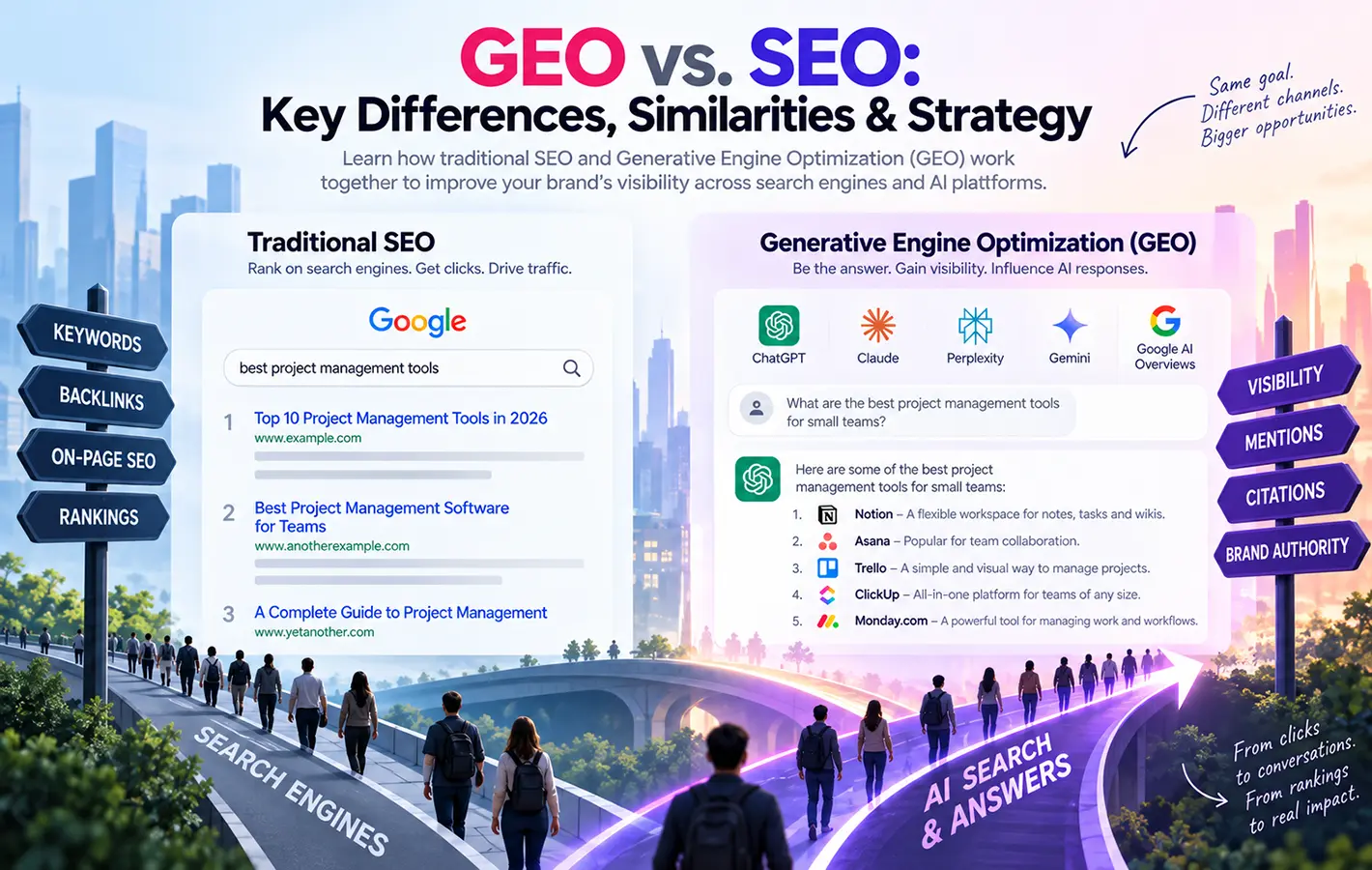
While one of the main goals of traditional SEO is to rank highly in search results, one of the key goals of GEO is to ensure that a brand appears within AI-generated answers.
For example, when a user asks:
"What are the best e-commerce platforms in Turkey?"
they may not simply receive a list of traditional search results. AI systems can collect information from multiple sources, compare platforms, explain their features, and directly recommend certain brands.
GEO aims to increase the likelihood that your brand becomes one of the candidate sources used in these answers.
| SEO | GEO |
|---|---|
| Focuses on ranking in search results | Focuses on visibility in AI-generated answers |
| Keyword-focused | Query and user-intent focused |
| Organic traffic is a key metric | Mentions, citations, and AI visibility are key metrics |
| Backlinks are a strong signal | Brand authority and source diversity are important |
| SERP performance is monitored | Platforms such as ChatGPT, Gemini, and Perplexity are monitored |
| Page-level optimization | Brand authority and topical authority are evaluated together |
SEO and GEO are not alternatives to each other.
A strong strategy should use both approaches together. Websites with strong technical foundations, organic authority, and clear answers to user questions also establish an important foundation for AI visibility.
How Should Content Be Written for AI Queries?
When creating content for AI visibility, you should not focus only on high-volume keywords.
You also need to understand how people ask questions on AI platforms.
Queries on AI platforms tend to be longer, more detailed, and more conversational than traditional Google searches.
For example, a traditional SEO query might be:
AI visibility tool
An AI query might instead look like this:
What are the best tools for measuring how visible my brand is in ChatGPT and Perplexity answers?
This shift directly affects content strategy.
It is no longer enough to have only general product or category pages on your website. You should create content that addresses the questions users may ask at different stages of the buying journey.
Particularly valuable content formats for AI queries include:
- How-to content: Helps users solve a problem step by step.
- Comparison content: Compares products, services, or methods using objective criteria.
- Alternative content: Helps users discover different options.
- Question-and-answer content: Directly responds to specific queries.
- Research and data content: Provides original insights and statistics.
- Guides: Explains a topic from beginner to advanced level.
- Use case content: Demonstrates real-world use cases for a product or service.
Try to answer the main question within the first few sentences of each section.
Instead of hiding the answer beneath a long introduction, provide clear information immediately. This improves user experience and also makes the content easier for machines to understand.
How Does Brand Authority Affect AI Results?
In AI visibility, what you say about your brand on your own website is not the only thing that matters.
How your brand is described across the broader web can also create a strong signal.
Brand mentions across news websites, industry publications, review platforms, forums, social platforms, comparison websites, and other trusted sources can make your digital presence easier to verify.
If an AI system repeatedly encounters the same brand associated with the same category across multiple trusted sources, the relationship between the brand and that category becomes clearer.
For example, it is useful for a SaaS brand to consistently describe itself as an "AI visibility platform" on its own website. However, if independent websites also describe the same product as an AI visibility solution, that can create a much stronger digital signal.
To strengthen brand authority:
- Gain mentions in industry publications.
- Publish expert opinions and original research.
- Appear on product comparison pages.
- Increase PR and digital PR activities.
- Create up-to-date brand profiles in trusted directories.
- Improve the digital visibility of founders and experts.
- Keep brand and product descriptions consistent across the web.
- Produce original data that other websites may want to reference.
The goal is not simply to acquire backlinks.
The main objective is to establish a strong and verifiable relationship between your brand and a particular topic across the web.
How Is Technical SEO Done for AI?
Even if your content is excellent, your visibility can remain limited if AI crawlers and search engines cannot access your pages.
Therefore, one of the first stages of AI optimization should be verifying technical accessibility.
For example, it is important for your website to be accessible to OAI-SearchBot if you want to appear in ChatGPT Search.
OpenAI also states that placement in ChatGPT Search results is not guaranteed and that multiple factors, including relevance and reliability, are used when ranking results.
Technical checks should include:
| Check | Why It Matters |
|---|---|
| robots.txt | Determines whether AI and search crawlers can access pages |
| noindex checks | Identifies pages accidentally excluded from indexing |
| XML Sitemap | Helps important URLs get discovered |
| Canonical | Defines the primary URL among similar pages |
| Structured Data | Helps systems understand entities on the page |
| Internal linking | Strengthens relationships between topics |
| Page speed | Improves crawling and user experience |
| Rendering checks | Ensures JavaScript content remains accessible |
| HTTP status codes | Identifies broken or redirected URLs |
For JavaScript-heavy websites in particular, loading important content only after user interaction may create crawling problems.
Core product information, category descriptions, and critical content should, whenever possible, be available within accessible HTML.
How Should Keyword Research Be Conducted for AI Queries?
Traditional keyword research should not be abandoned, but the scope of research should be expanded for AI visibility.
It is no longer enough to ask:
"What is the monthly search volume?"
You also need to analyze which questions a user might ask ChatGPT, Gemini, or Perplexity about the category in which your brand operates.
For example, instead of targeting only:
for an AI Visibility platform such as Franixo, you should also evaluate queries such as:
- What are the best AI visibility tools?
- How can I measure brand visibility in ChatGPT?
- Why is my brand not appearing in ChatGPT results?
- How can I improve brand visibility in Gemini?
- Which sources does Perplexity use?
- What is the difference between GEO and SEO?
- How is Generative Engine Optimization done?
- How can ChatGPT brand mentions be tracked?
- How can I analyze my competitors' AI visibility?
- How can I increase website traffic from AI searches?
The key point here is to create a topic cluster.
Rather than creating one article for one query, build interconnected content clusters around a central topic.
For example:
Main topic: AI Visibility
Supporting content:
- What Is AI Visibility?
- What Is GEO?
- GEO vs SEO
- How to Do ChatGPT SEO
- How to Do Perplexity SEO
- What Is an AI Mention?
- What Is an AI Citation?
- How to Measure AI Share of Voice
- Best AI Visibility Tools
- How to Increase Brand Visibility in ChatGPT
This structure helps search engines and AI systems understand that your website provides comprehensive information within a particular subject area.
How Can You Create Content That AI Systems Can Cite?
One of the key goals for brands seeking greater AI visibility should be creating citable content.
Instead of long and vague paragraphs, create specific, easy-to-understand information blocks that can stand on their own.
For example:
Weak statement:
As artificial intelligence becomes increasingly widespread today, it is important for brands to improve themselves through various methods.
This sentence does not provide specific information.
Stronger statement:
AI Visibility measures how frequently a brand appears in answers generated by ChatGPT, Gemini, Perplexity, and other generative AI platforms, as well as the context in which the brand is recommended.
The second statement is clearer, more descriptive, and meaningful on its own.
A useful content structure is:
Question → Short Answer → Detailed Explanation → Example → Data or Comparison
For example:
What Is AI Visibility?
AI Visibility refers to how visible a brand is within AI-generated answers. Brand mentions, citations, visibility relative to competitors, and query performance across different AI platforms can all be analyzed as part of AI Visibility.
You can then continue with a more detailed explanation.
This approach allows readers to find answers more quickly while also separating important information clearly on the page.
How Is AI Visibility Measured and Improved?
Measurement is one of the most critical aspects of AI optimization.
Manually running only a few ChatGPT queries is not enough to accurately evaluate a brand's visibility. Hundreds of queries representing different user intents should be monitored regularly.
Useful metrics include:
| Metric | Description |
|---|---|
| AI Visibility | Overall visibility of the brand in AI-generated answers |
| Mention | Frequency with which the brand appears in responses |
| Citation | Whether the brand or website is used as a source |
| Share of Voice | Visibility relative to competitors |
| Prompt Coverage | Percentage of tracked queries in which the brand appears |
| Competitor Visibility | Performance of competing brands in AI results |
| Source Analysis | Websites AI systems use as sources |
| Sentiment / Context | The context and wording used to describe the brand |
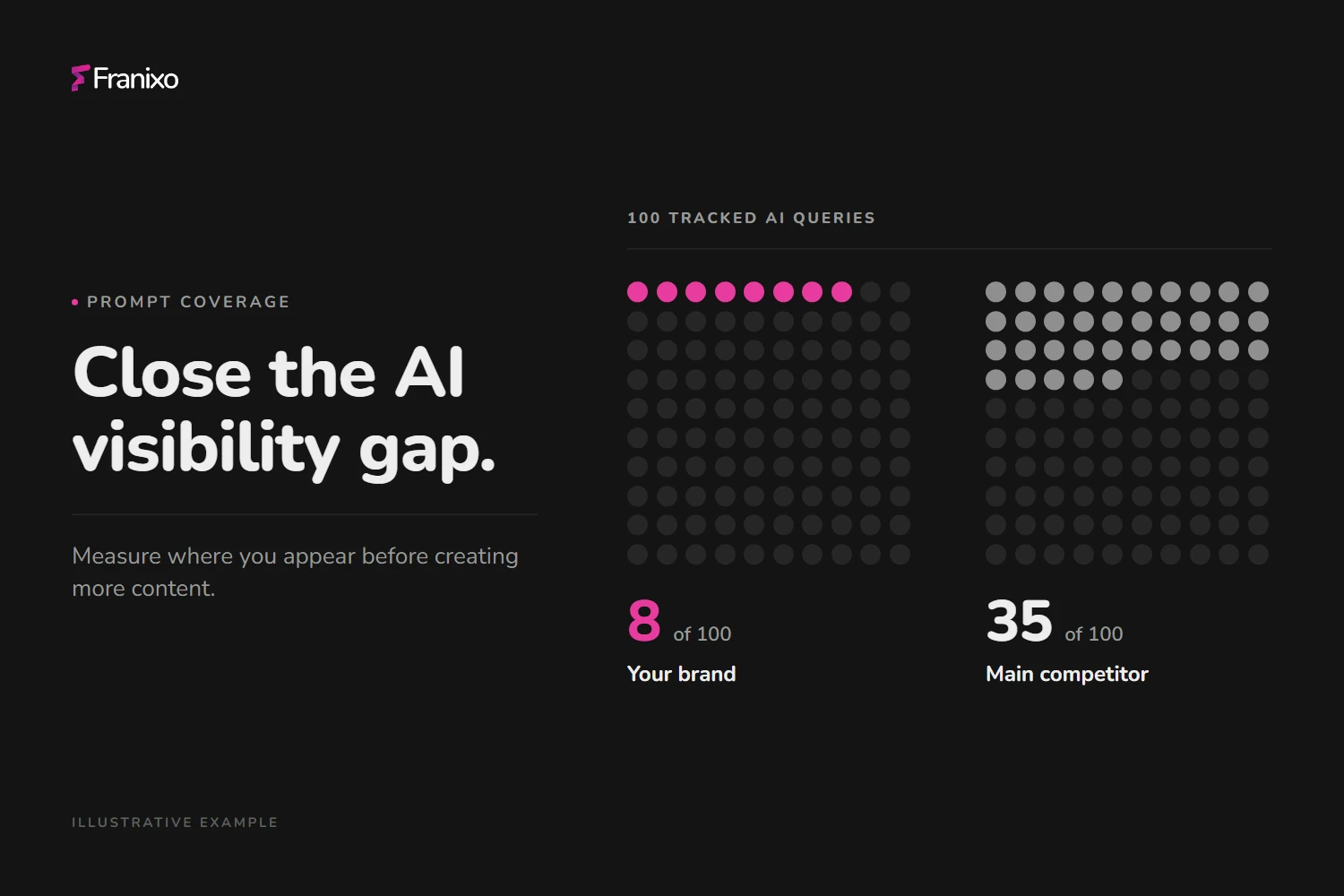
For example, if your brand appears in only 8 out of 100 important AI queries while your main competitor appears in 35, there may be a significant AI visibility gap.
You can then analyze which queries your competitor performs strongly in.
Next, examine which sources are being used by AI systems and determine which gaps exist in your content, digital PR, and brand authority strategy.
The goal should not simply be to increase an overall visibility score.
Your brand needs to appear in commercially valuable queries.
Appearing for "What is X?" can be useful, but queries closer to the decision stage are often significantly more valuable, such as:
- Best X tools
- X alternatives
- X vs Y
- Which X tool should I use?
What Should You Do to Appear More Frequently in AI Queries?
Increasing visibility in AI queries cannot be achieved through a single optimization.
Technical infrastructure, content strategy, brand authority, and measurement must all be managed together.
| Action | Purpose | Priority |
|---|---|---|
| Check AI bot access | Ensure content can be discovered | High |
| Analyze user questions | Target real AI queries | High |
| Build topic clusters | Increase topical authority | High |
| Write clear, direct answers | Improve content understanding | High |
| Publish original data and research | Produce referenceable content | High |
| Use Structured Data | Make page structure clearer | Medium |
| Conduct digital PR | Strengthen brand authority | High |
| Increase third-party mentions | Strengthen brand-category association | High |
| Measure AI visibility | Monitor performance | High |
| Analyze competitors | Discover visibility opportunities | High |
| Update content | Maintain freshness | Medium |
| Improve internal linking | Strengthen topical relationships | Medium |
A successful AI visibility strategy should follow this cycle:
Measurement → Analysis → Optimization → Re-measurement
Creating content without knowing which queries your brand is missing, increasing the number of blog posts without analyzing which sources influence AI answers, and building a strategy without measuring competitor visibility can all lead to inefficient results.
Core Strategies for Improving Success in AI Queries
To achieve sustainable visibility in AI searches, brands should take a multi-dimensional approach ranging from technical infrastructure to content architecture.
| Strategy Area | Core Action | Target AI Outcome |
|---|---|---|
| Semantic Coverage | Organize topics through question-answer formats and concept clusters | Help the model comprehensively understand the topic |
| Direct Citation | Publish original research, statistics, and case studies | Be selected as a cited source by engines such as Perplexity and Gemini |
| Entity Definition | Build complete Wikidata and corporate Schema structures | Establish a verified brand entity in knowledge graphs |
| Community Proof | Build an active brand presence on review sites and forums | Appear in recommendation queries such as "best tools" |
How Can Franixo Help You Appear More Frequently in AI Queries?
Franixo is an AI Search Intelligence and AI Visibility platform focused on analyzing brand visibility across AI channels such as ChatGPT, Gemini, Perplexity, Claude, and Google's AI-powered search experiences.
With Franixo, you can track the queries that matter to your brand and analyze:
- which AI answers include your brand,
- which competitors appear more frequently than you,
- and where visibility opportunities exist.
This allows you to build your GEO strategy based on real query results rather than assumptions.
Identifying queries where your competitors are strong but your brand is absent can reveal new content opportunities. At the same time, tracking how your brand is positioned across AI platforms helps you measure the impact of your existing content and brand strategy.
The first step toward gaining more visibility in AI queries is not simply producing more content. Instead, you should accurately measure your existing AI visibility and identify visibility gaps.
Franixo makes this process measurable and trackable, helping brands prepare for the next generation of search experiences.